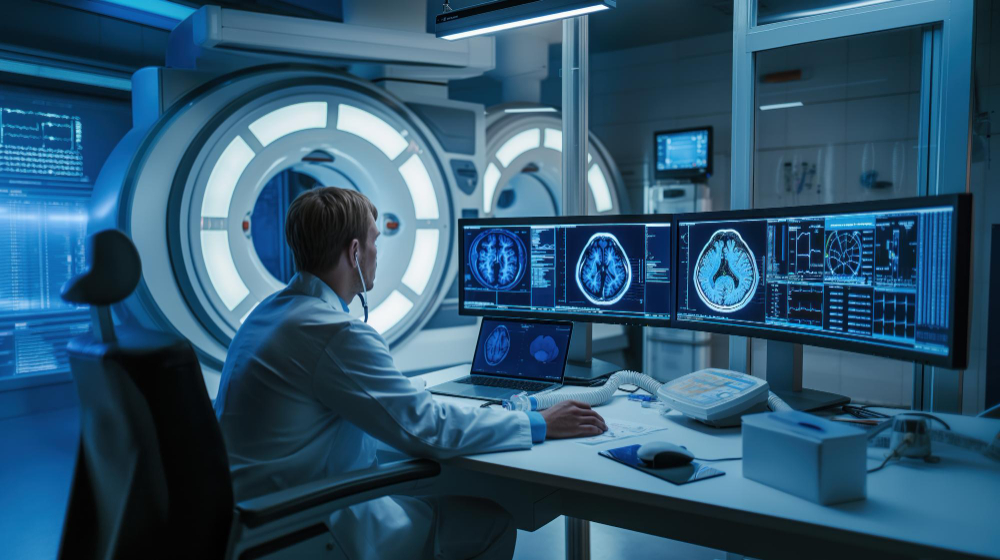
Teleradiology in faster and accurate diagnostic reporting is changing how doctors review medical images. With teleradiology, experts can look at X-rays, CT scans, and MRIs from anywhere. As a result, patients get answers more quickly and with greater accuracy. This modern approach uses digital tools to connect radiologists and hospitals, even if they are far apart. Because of this, many people now get the care they need without long waits. In this blog, we will explore how teleradiology works and why it matters for both patients and healthcare providers.
What Is Teleradiology?
Teleradiology is the process of sending medical images from one place to another using digital technology. For example, a hospital in a small town can send X-rays to a radiologist in a big city. This expert then reviews the images and sends back a report. As a result, patients do not need to travel far for expert care. Teleradiology is a type of remote radiology reporting. It uses secure internet connections to keep patient data safe. Because of its flexibility, teleradiology is now used in many hospitals and clinics worldwide.
How Teleradiology Speeds Up Diagnostic Reporting
With teleradiology, doctors can get fast radiology results. Instead of waiting for a local specialist, images are sent to available radiologists anywhere. This process often takes just minutes or hours, not days. Therefore, patients can start treatment sooner. In emergencies, quick results can save lives. For example, stroke patients need fast decisions. Teleradiology helps doctors act quickly.
Accuracy Improvements with Teleradiology
Not only does teleradiology speed up care, but it also improves accuracy. Because images can be shared with many experts, there is a higher chance of correct diagnosis. For instance, some cases are reviewed by more than one radiologist. This process, called double reading, helps catch errors. According to the World Health Organization, digital diagnostic imaging can reduce mistakes in reading scans. As a result, patients get more reliable answers. In addition, teleradiology allows specialists to focus on their areas of expertise, leading to more accurate radiology interpretation.
Common Applications of Teleradiology
Teleradiology is used in many ways across healthcare. For example, it helps with:
Because of its flexibility, teleradiology is important in both large cities and small towns.
Benefits for Patients and Healthcare Providers
Teleradiology offers many advantages. First, patients get quicker answers, which can ease worry. Also, they do not need to travel far for expert care. For healthcare providers, teleradiology means better use of resources. Hospitals can share workloads and avoid delays. In addition, digital diagnostic imaging helps keep records safe and easy to access. Some key benefits include:
Because of these benefits, many hospitals now use teleradiology as part of their daily care.
Challenges and Considerations in Teleradiology
While teleradiology brings many benefits, there are also challenges. For example, internet speed and security are important. Hospitals must use secure systems to protect patient privacy. In some areas, slow internet can cause delays. Also, not all doctors are trained in digital systems. Therefore, ongoing training is needed. Another concern is making sure reports are clear and easy to understand. Despite these challenges, most experts agree that the benefits outweigh the risks. However, careful planning is needed for safe and effective use.
Future Trends in Teleradiology
Teleradiology is expected to grow even more in the coming years. New tools like artificial intelligence (AI) will help radiologists find problems faster. For example, AI can highlight areas of concern in scans. As technology improves, digital diagnostic imaging will become even more accurate. In addition, better internet access will help more rural areas benefit from remote radiology reporting. Book an appointment at Vista Imaging and Medical Centre Private Limited for faster and more reliable care.